



"You can't save the world for free"
(Published in the special sustainability supplement of the Tagesanzeiger on 17.12.2025)
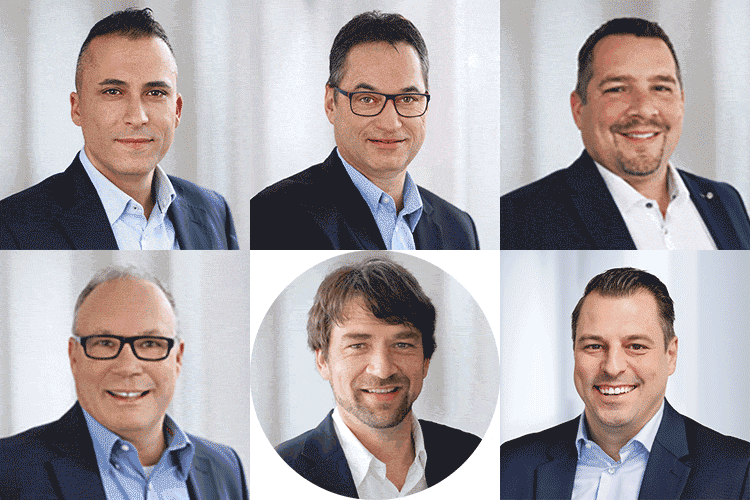
After twelve formative years, Peter Schwägli is handing over the management of the "Lighting" division at Elektron AG to Philippe Kleiber. "Fokus" spoke to the two of them about an industry in transition, saying goodbye to the throwaway mentality - and why we will be sourcing light as a service in future.
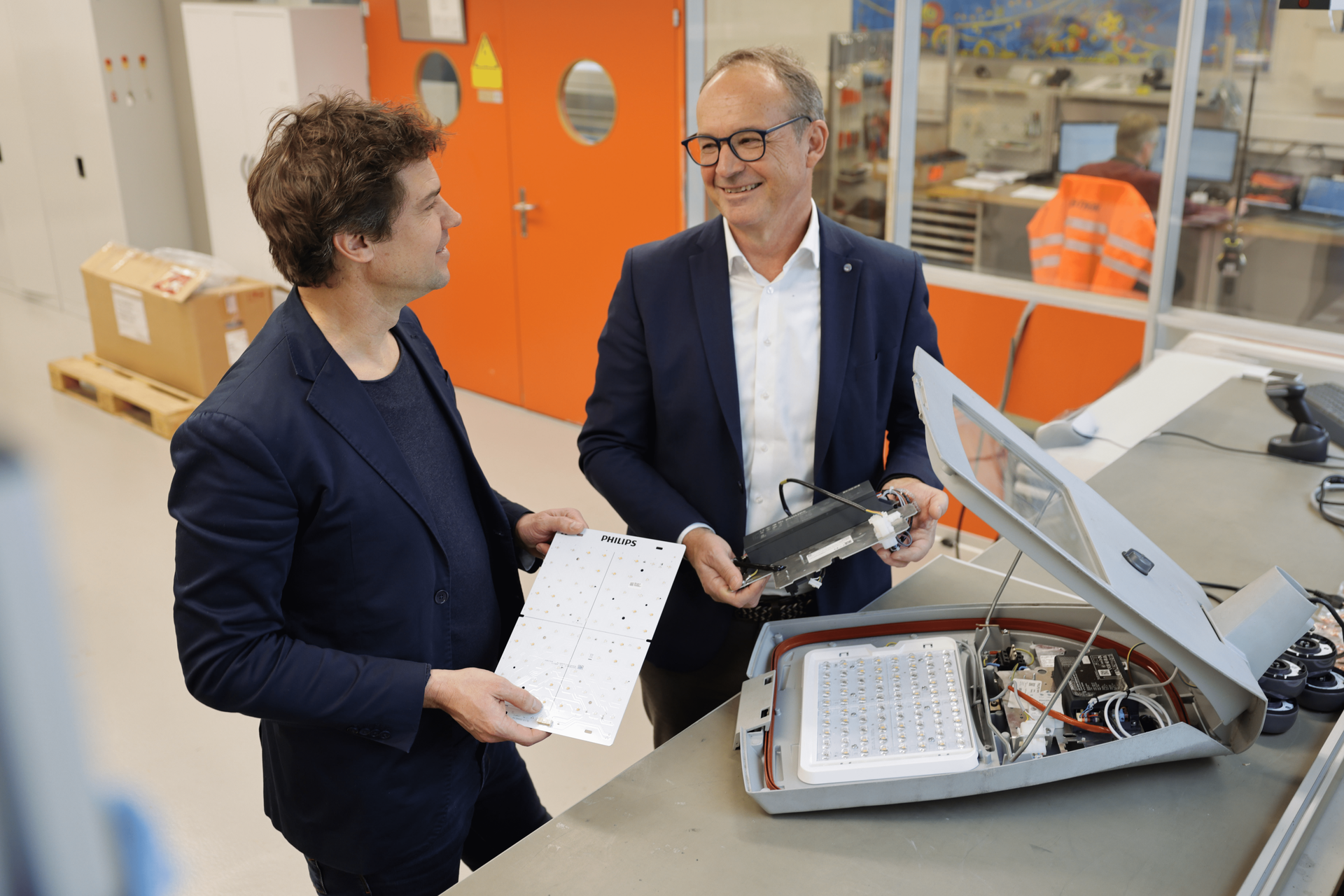
Mr. Schwägli, at the end of this year you will be handing over the reins - or rather the torch - to Philippe Kleiber, your successor as Managing Director "Light" at ELEKTRON AG. How do you feel about this moment?
Peter Schwägli: I am very happy with the situation for the succession plan: Philippe Kleiber and I have known each other for a long time and he brings a lot of experience and industry knowledge with him. This allows me to move on to the next phase of my career with peace of mind. Knowing that the team is in the best hands.
What has particularly shaped the last twelve years for you?
Peter Schwägli: Almost everything has changed in the lighting industry during this time. The "LED-ification" was certainly the most fundamental change - and I found myself in the middle of this development. Digitalization revolutionized the industry and brought with it a great deal of potential: networked infrastructures, control and monitoring with modern lighting management systems, enormous increases in efficiency. It was a real paradigm shift and a decisive step towards the smart city.
Mr. Kleiber, how big do the shoes you're stepping into feel?
Philippe Kleiber: I have great respect for my new role - especially when I see what Peter has built up here. That deserves a clear "Chapeau". At the same time, I am delighted with the excellent starting position: we have a strong team and a well-positioned company. This gives us the basis to tackle the big issues of the future. Because even though the LED conversion will soon be largely complete, exciting new opportunities are just around the corner. My goal is clear: ELEKTRON should continue to play a pioneering role.
As the former Managing Director of the Swiss Lighting Society (SLG), you certainly bring valuable experience to the table.
Philippe Kleiber: Yes, absolutely. The network I was able to build up during this time is a real plus. But even more importantly, I experienced first-hand how much potential there is in saving energy, especially in lighting. Lighting is the only area in Switzerland where energy consumption is actually falling - while other sectors are actually increasing. This shows how much we have already achieved here and how exciting the future remains.
The combination of big data and AI will trigger the next big innovation push. The information is there, but to use it proactively, we need AI.
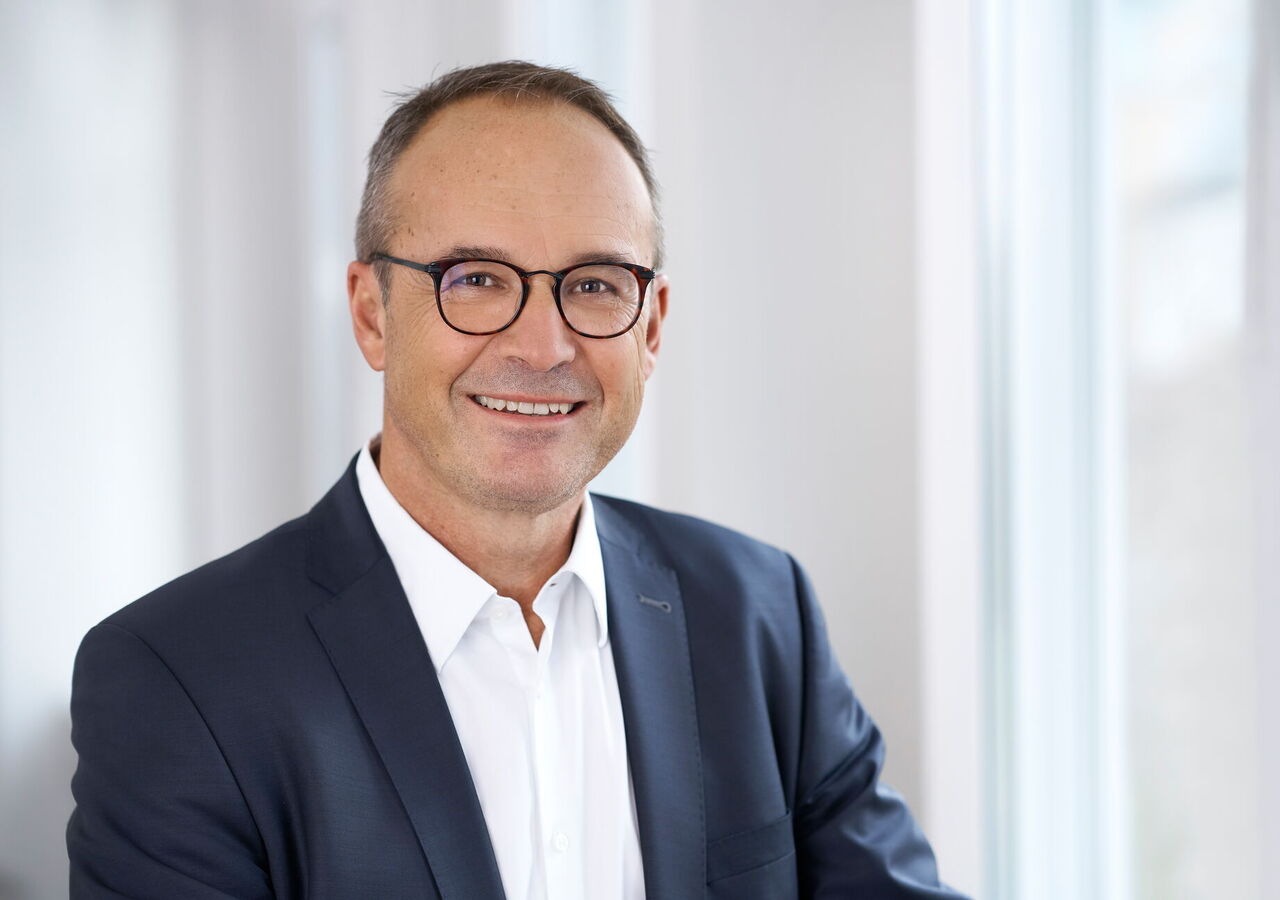
Which topics will change public lighting in the future
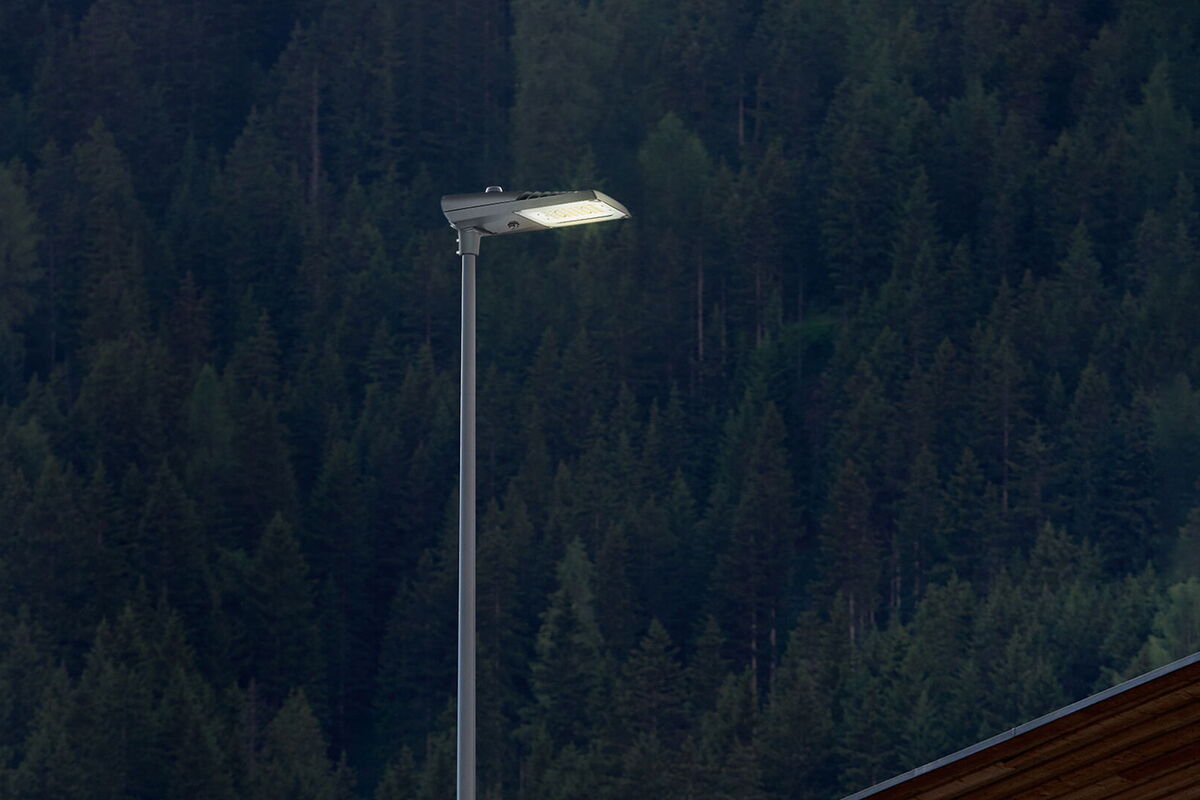
Peter Schwägli: Sustainable economic efficiency is becoming an even greater focus. Take street lights, for example: We use high-quality materials such as aluminum for their production, as the systems are very exposed. It is assumed that luminaires have usage cycles of around 20 years. However, aluminum actually has a service life of 60 years and causes the largest CO₂ footprint during production. This raises the compelling question: why shouldn't we use the housing a second time? A "second life" makes a lot of sense here. Our high-quality luminaires from our partner Signify are already manufactured as sustainably as possible: without adhesives, from over 88% recycled aluminum. If we now double the useful life of these lights, the positive impact would be even greater.
Just this year, ELEKTRON launched the Luma gen1 UP, the industry's first circular street light. What makes it stand out?
Peter Schwägli: We are giving the tried-and-tested Luma gen1 luminaire family a second life with an upgrade kit. The LED technology is replaced and interfaces for networking are integrated, while the housing is reused. The conversion is being carried out here in Switzerland by social institutions. Our goal when we launched the product was uncompromising: a reduction in CO2 emissions of over 75% compared to the production of a new luminaire and much greater energy efficiency. In addition, our customers receive the same warranty as with new luminaires.
Do you only focus on second-life concepts for environmentally friendly lighting?
Peter Schwägli: In addition to the topic of "refurbishment" (second-life concepts), which we have made a priority, our goal remains the same today as it was then: Through professional lighting design, we work with our customers to implement energy-efficient installations that cause minimal impact on biodiversity. All of this, of course, in accordance with established road safety requirements.
What solutions does ELEKTRON have for this?
Philippe Kleiber: Thanks to digitalization and sensor technology, we can now implement lighting solutions that were unthinkable just a few years ago: motion-dependent lighting concepts in public spaces, targeted lighting of pedestrian crossings - all intelligently controlled. Our goal is ambitious: With LED technology, smart control and targeted dimming, we want to save up to 90 percent energy compared to conventional lighting technologies. This is not only sustainable, but also offers our customers real added value.
Peter Schwägli: We have gone one step further: Since 2021, all our lights have been available with a climate-friendly CO2 certificate, with contributions going towards local and global climate projects. The first circular street light has now followed this year - I'm looking forward to seeing how things develop in the coming years.

Thanks to digitalization and sensor technology, we can now implement lighting solutions that were unthinkable just a few years ago.
What role will artificial intelligence play in the lighting of tomorrow?
Peter Schwägli: The combination of big data and AI will trigger the next big innovation push. The information is there, but we need AI to use it proactively. Imagine, for example, large crowds of people moving through a city after a football match. The lighting management system must proactively know when and where it needs to be brighter in order to dim the lights optimally. This only works with intelligent data processing.
The phrase "You have to be able to afford sustainability" persists. What is your response to this?
Peter Schwägli: Sustainability costs money. The only question is: when and how much? The world cannot be freed from CO₂ for free. Profitability and sustainability can be combined if there is commitment and conviction to follow a path without knowing the exact destination. This requires commitment, resilience and perseverance from everyone involved.
I am convinced that if CO₂ reduction had an official price tag, many things would be easier. Our customers would know in black and white that the measures we are implementing today are cheaper than if we only start in 10 years' time. Because if you really want to be sustainable, you shouldn't just look at the product, but at the entire life cycle from production to operation to refurbishment.
Philippe Kleiber: My credo is: we don't just have to plan things, we have to implement them and make them tangible for our customers. Sustainability must not be a buzzword, it must be tangible.
Where is the journey going?
Philippe Kleiber: We are already thinking about new business models. One particularly exciting field is "light as a service": perhaps in future we will no longer sell luminaires, but provide light as a service. This opens up completely new possibilities for long-term planning and conserving resources. But this requires more than just us as a provider: Our customers and partners must also be prepared to think sustainably and creatively together. Only together can we shape this future.