
2026 will be the year of battery storage - what installers need to know now"
Why will the solar storage market in Switzerland change fundamentally in 2026? What does this mean in concrete terms for solar system owners? And why will 2026 be the boom year for battery storage systems?
Peter Dietiker, Managing Director of Green Building, and Ivan Hofer, Marketing Manager for solar storage systems at Elektron for exactly two days, recently discussed all this and much more.
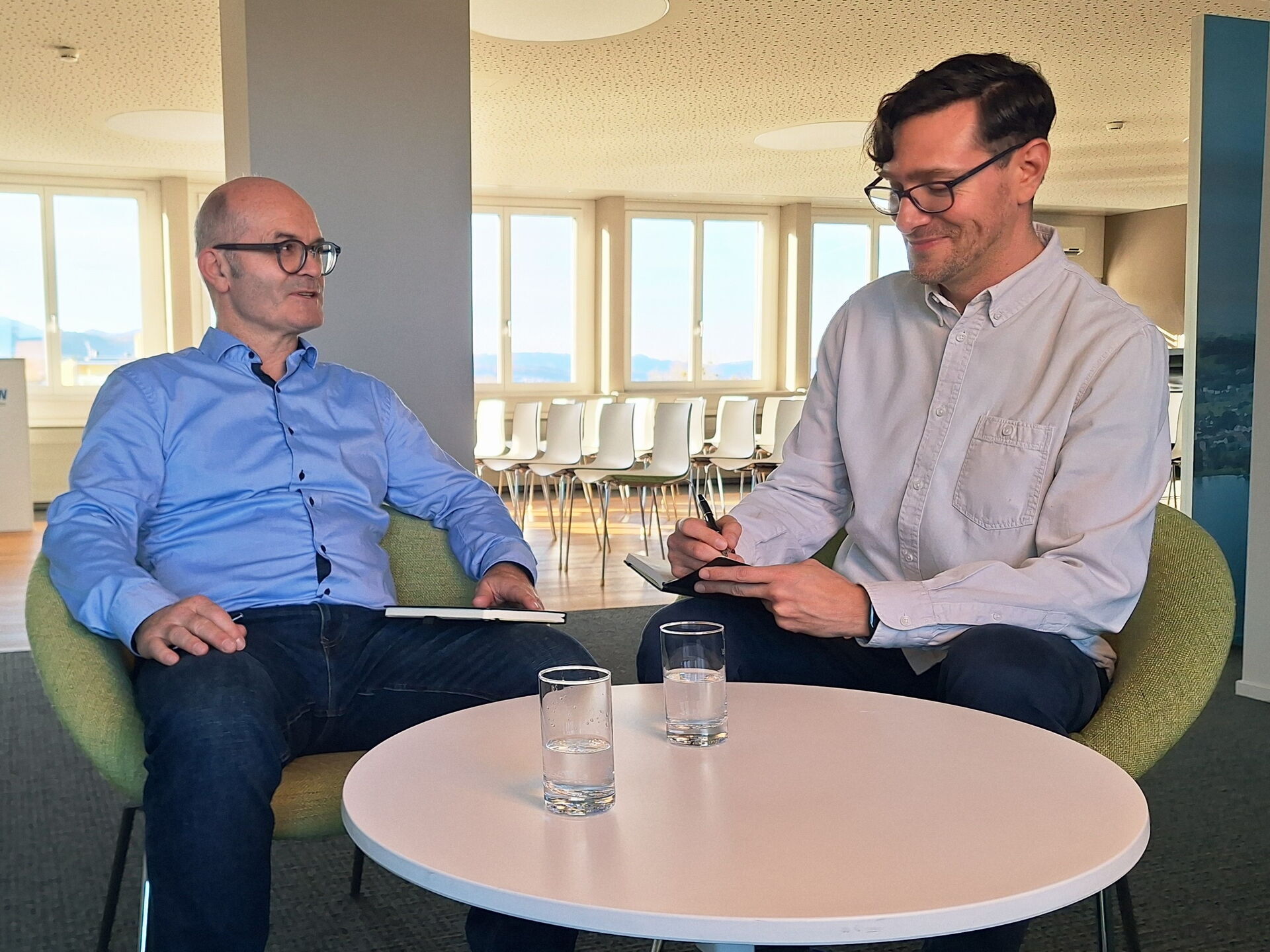
Ivan: Two days on the job - and already an interview? So I haven't been allowed to do that anywhere yet
Peter: Well, that's exactly my motto. Speed is a must if you want to be successful in the solar storage market.
Well then, let's get into the matter all the faster. You read everywhere that the Swiss electricity market will change fundamentally from 2026. What are the most important changes for solar system owners?
Absolutely, Ivan. New rules will apply from 2026: The feed-in tariff for solar power will now be based on the quarterly market price set by the Swiss Federal Office of Energy. For smaller systems, there will - probably - be a minimum feed-in tariff so that small systems do not go away empty-handed. At the same time, there will be dynamic electricity tariffs, meaning that the electricity price can change hourly depending on supply and demand.
What does this mean in concrete terms for solar system owners and installers?
Self-consumption is becoming even more important. If you use your solar power yourself, you save significantly more than if you feed it into the grid - especially in summer, when market prices are so low that you give the electricity away. I like to make my carrot comparison: it makes no sense for me to throw my carrots from my own garden in the bin in the evening just to buy new ones from the retailer the next day. I buy a fridge first. I think everyone sees it that way.
With dynamic tariffs, it's worth using or storing electricity when it's cheap. All of this makes battery storage a key element: it allows you to use your own solar power flexibly and become less dependent on the grid.
In my job interview, you told me that 2026 would be the boom year for battery storage. Now that I'm already here, be honest: did you say that to win me over, or are you actually that convinced?
I am 100% convinced. Because three things come together: Firstly, the new remuneration logic makes self-consumption much more economical than feeding into the grid. Secondly, dynamic tariffs reward flexibility - and storage systems are the most flexible resource "behind the electricity meter". Thirdly, the prices for battery storage have fallen massively in recent years. The majority of new PV systems have a battery storage system right from the start; it is the new standard.
Where there is still a lot of potential, however, is in retrofitting. 75% of existing systems do not yet have batteries, even with low self-consumption. With the new situation, I believe we and the installers have a duty to inform end customers: Now is the time to retrofit.
What kind of storage systems do we at Elektron rely on?
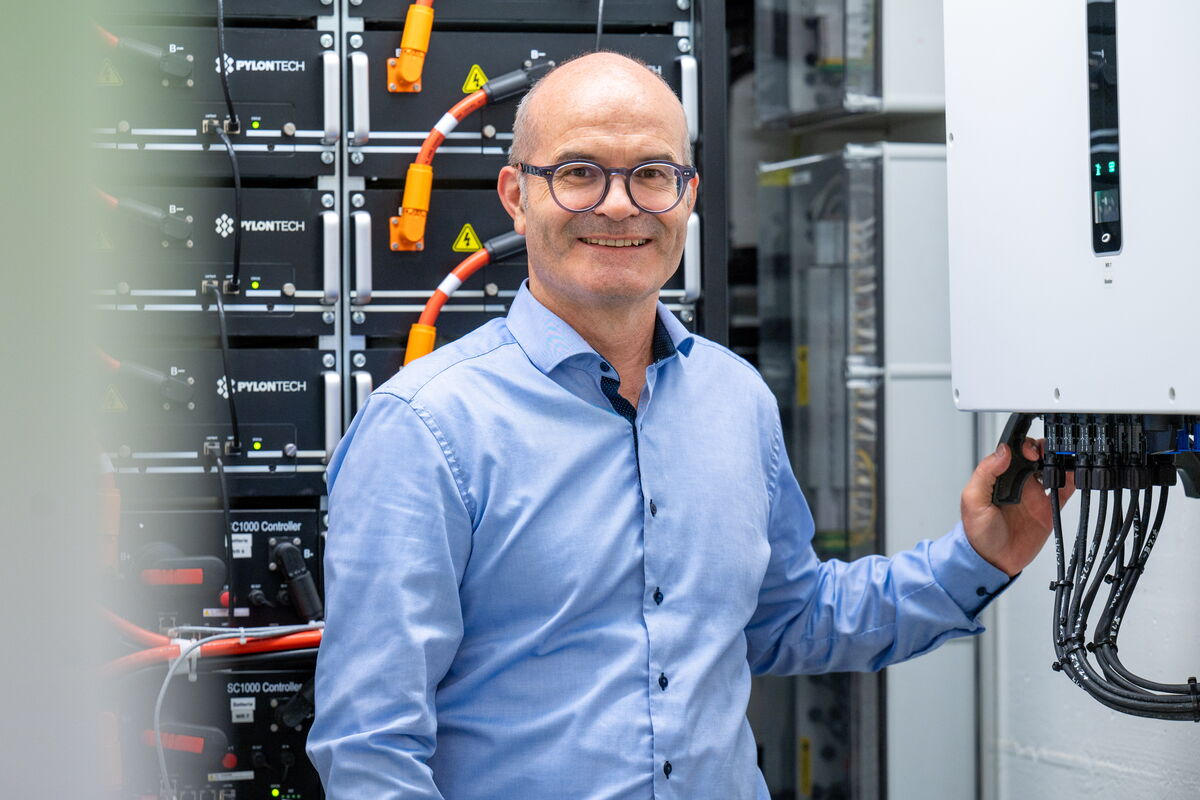
It is important to us that installers are relieved and supported in the best possible way. That's why we offer all our systems as a plug & play solution. This means that the batteries and hybrid inverters are preconfigured and ready for installation straight away.
And what about commercial and industrial applications?
Exactly! In trade and industry, the leverage is even greater. Many companies pay demand charges and can use storage to cap peak loads and reduce grid costs. So far, very little has been invested in storage here.
And why is that?
Firstly, products that are really suitable for this scale have only recently come onto the market and secondly, the costs were still too high.
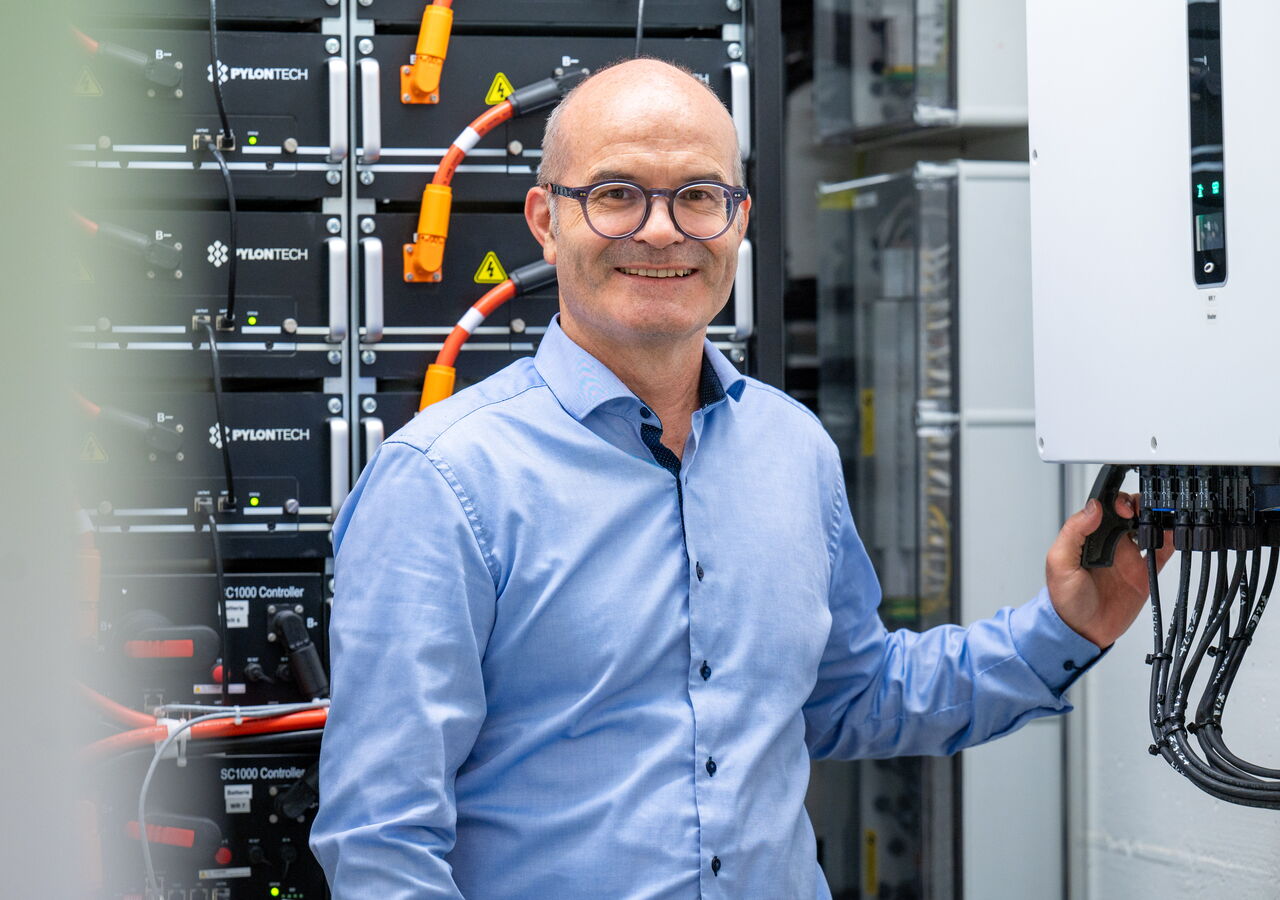
Brief portrait of Peter Dietiker
Managing Director Green BuildingPeter Dietiker, energy expert and Head of Solar
⚡25+ years of experience in the energy market
⚡Former Head of the Energy Division at Energie 360°
⚡Specialist for renewable energies, especially solar power and storage
⚡On a mission: to supply Switzerland with more solar energy and make maximum use of the potential of batteries
I have noticed that we are now also offering outdoor batteries
Exactly. From a certain size, there is not enough space in the building. And that's where outdoor storage systems come into play. These are weatherproof and always find a suitable place in industrial areas or in agriculture.
What should a company look out for when considering purchasing an outdoor storage unit?
Many customers want to be able to "do everything" with the storage system. This is often only possible with a time delay, or with additional battery capacity. That's why we attach great importance to detailed advice and clever dimensioning of the system.
Short portrait Ivan
Marketing ManagerIvan Hofer, Marketing Specialist
⚡8+ years of experience in marketing
⚡Specialist for digital marketing, but sometimes also on the road as an interviewer
⚡Passionate about the environment
⚡Since new responsible for the marketing power for solar at ELEKTRON

What do you recommend installers do to make the most of 2026?
Firstly, use hybrid inverters as standard and offer storage systems as well - whether for single-family homes or businesses. Secondly, think about retrofitting and actively advise existing customers on this. There is great potential here for installers. Thirdly, analyze load profile data for commercial projects and design storage systems specifically for peak shaving and self-consumption. And fourthly: stay on the ball with Elektron when it comes to subsidies and new regulations.
At the end: What is your conclusion for the industry?
I am convinced that 2026 will be the starting signal for the broad integration of storage systems in Switzerland. And we are at the forefront and also proud to be making a decisive contribution to the energy transition together with our installation partners.
Would you like to find out more or get advice?
Contact our team or visit our store for price information and data sheets.